A busy commercial kitchen is controlled chaos. In the middle of a Friday night service, the floor is usually the last thing on your mind, until someone slips, or the health inspector points out grime in the grout lines.
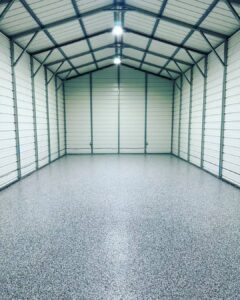
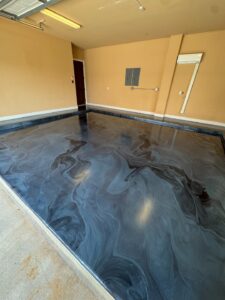
If you are still relying on cracked tiles or peeling vinyl, you are making your job harder. Switching to seamless commercial kitchen flooring, like epoxy, is one of the smartest operational moves you can make.
Here is why your back-of-house needs an upgrade.
1. The Health Inspector’s Dream
If you have tiles, you have grout lines. And no matter how much you scrub, those porous lines trap grease, food particles, and bacteria. It’s exactly what inspectors look for. Epoxy changes the game because it’s seamless. There are no cracks for “kitchen gunk” to hide in. You get a sealed surface that doesn’t absorb fluids, meaning a simple wash down actually gets the floor clean.
2. Stopping the “Slip and Slide”
Grease and water make kitchens dangerous. A slip isn’t just an annoyance; it’s a liability. We design our commercial kitchen flooring with safety in mind. Unlike smooth tiles, we add texture to the epoxy finish. This gives your staff the traction they need to hustle safely, even when things get wet or oily. It keeps your team upright and confident during the rush.
3. Built for the Heat and the Heavy Lifting
Kitchen floors take a beating. You have heavy mixers vibrating, hot oil spilling, and constant foot traffic. Standard flooring often peels or cracks under this pressure. Commercial epoxy chemically bonds to the concrete, creating a surface that is incredibly tough. It handles thermal shock and impact without flinching, so you won’t have to shut down the restaurant for repairs in six months.