Natural color. Organic variation. No two slabs alike.
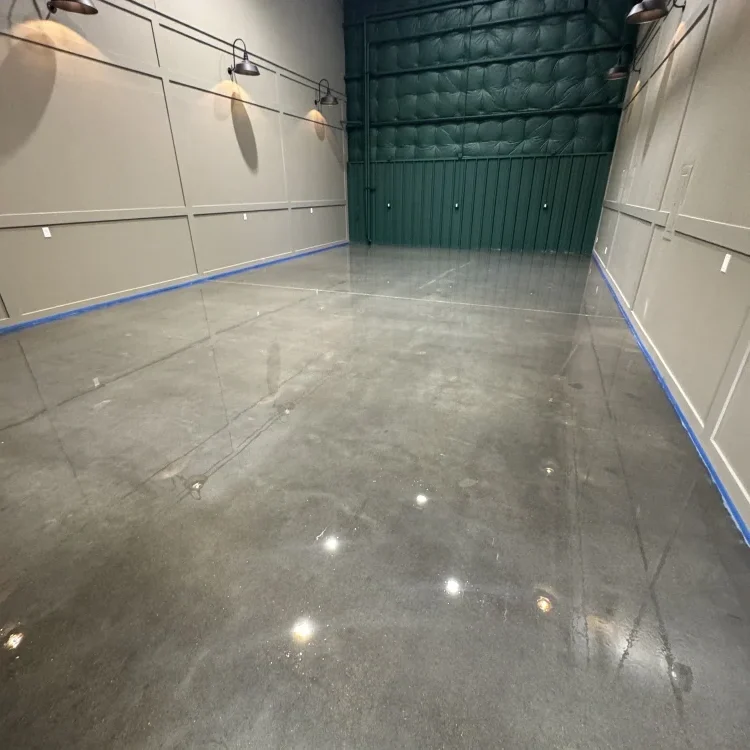
Stained concrete pulls color from the slab instead of painting it on top. Acid stains react chemically with the lime in the concrete to create earth-tone mottling that mimics leather, stone, or aged patina. Water-based stains layer in richer hues without the reactive variability. Sealed and polished for durability, then yours for a decade plus.
Character, not uniformity.
Stained concrete is the right floor for anyone who wants natural, organic color variation instead of a uniform manufactured finish. The stain interacts with the chemistry of your specific slab, so two adjacent slabs stained with the same bottle will look different. That variability is the feature. It reads as character the way an old leather sofa reads as character, which is why stained concrete shows up in galleries, modern homes, back-of-house restaurant floors, and covered patios across South Houston.
There are two stain families and they do different jobs. Acid stains are reactive. They contain metallic salts that chemically bond with the calcium in the slab, creating permanent mottled earth tones: rust, umber, green, tan, weathered black. The variation is wild and not fully controllable. Water-based stains are pigmented rather than reactive. They give you broader, more saturated color options with tighter predictability, and they come in greens, blues, reds, and grays that acid stain cannot reach.
Both approaches require a clean, open-pored slab, which means we diamond grind before staining. Curing compound, old sealer, or surface contaminants will block the stain from penetrating and produce blotchy results that read as mistakes instead of character. That prep step is why our stained floors look intentional instead of cheap. The pour looks expensive because it is controlled: the variation is organic, the base is clean, and the sealer locks the whole thing down permanently.
After staining, we apply a two-coat sealer system that protects the color and gives you a maintenance profile similar to polished concrete: dust mop, damp mop with neutral cleaner, no waxing. For patios and covered outdoor use, we spec a UV-stable sealer so the color holds under Gulf sun. For interior work, we can run gloss levels from matte to semi-gloss depending on the vibe you want. Our portfolio has examples in both acid and water-based stains.
“Stain is the floor where you have to embrace the fact that the slab is going to do its own thing. If you need uniformity, pick dyed polish instead. If you want character, stain is the best dollar-per-square-foot creative floor we install.”Justin Thurmon, Owner
Four steps. Then the slab does its thing.
The install is straightforward but the sequence matters. We always stain a test patch first so you approve the color range before the full pour. Acid stains especially can shift from dry to sealed, so the preview step is non-negotiable.
Prep & Profile
Diamond grind to open the pore structure and remove any curing compound, sealer, or contaminant that would block stain absorption.
Test Patch
Stain a 3×3 test zone in a corner. Let dry, rinse, and preview sealed. Approve the color range before main application.
Apply Stain
Acid stain sprayed or mopped, allowed to react, then neutralized and rinsed. Water-based stain applied in layers.
Seal & Finish
Two-coat sealer system. UV-stable for outdoor use, interior-spec for inside. Gloss level to match your vision.
Acid vs water-based.
The first decision on every stained concrete project is which chemistry to use. Each family has a personality, a color palette, and a risk profile. We walk both options at the estimate and recommend based on the room, the light, and how much variability you actually want.
Acid Stain
Metallic salts in an acidic solution react with the lime in the slab to create permanent earth-tone mottling. The color is inside the concrete, not on top of it. Character is wild. Variation is unpredictable. Perfect for anyone who wants the floor to look like something time made.
- Earth tones only: rust, umber, tan, weathered black, forest green
- Highly variable, organic, mottled appearance
- Permanent color bond, cannot peel or fade
- Longer install window, neutralization step required
- Best for patios, modern homes, galleries, back-of-house
Water-Based Stain
Pigmented polymer stains that sit in the open pores of the slab. Broader color palette, tighter predictability. You can layer water stains for custom tones, blend multiple colors on a single slab, or saturate a consistent look across a large space.
- Broader palette: greens, blues, reds, grays, custom blends
- More controllable, layered application
- Low VOC, indoor-friendly during install
- Faster install, no neutralization
- Best for commercial interiors, restaurants, modern homes
The questions clients ask before committing to stain.
Will my floor look like the sample or like the photo I saw online?
The truthful answer is: your floor will look like your slab, stained. Acid stain especially reacts with the mineral content of your specific concrete, so the photos online are showing you what that contractor got on that slab. We run a test patch on your floor before the main application and you approve the color range based on your slab, not a showroom sample. That test step is why there are zero surprises at the final seal.
How does stained concrete hold up outdoors?
Well, with the right sealer. For patios, pool decks, and covered outdoor floors in Houston we spec a UV-stable two-coat sealer that holds color under Gulf sun and freezing overnight temperatures. The sealer reapplies every three to five years depending on sun exposure, which is lighter-touch maintenance than painted or coated outdoor floors. Direct, uncovered sun on unsealed stain will fade in a single season, so the sealer is load-bearing.
Can I stain a slab that already has cracks or chips?
Yes, and cracks often add to the organic character of a stained floor. We evaluate structural cracks during the estimate. Hairline cracks typically stay as part of the finish and read as veins in the stone-like surface. Structural cracks get addressed with chip repair and flexible filler before staining. We show you what the repairs will look like stained before committing.
How is stained concrete different from painted concrete?
Paint sits on top of the slab as a film. It chips, peels, and fades under real use. Stain is inside the slab. Acid stain is a chemical bond that cannot be removed, water stain penetrates the pore structure, and both are sealed after. When a painted floor fails you see it immediately and the floor looks bad. When a stained and sealed floor wears, the sealer wears first and reapplies cleanly without touching the color.
How do I maintain a stained concrete floor?
Dust mop daily, damp mop with a pH-neutral cleaner weekly. Avoid harsh solvents, acidic cleaners, and wire brushes. Sealer reapplies every three to five years on interior floors, more often on exteriors with heavy sun exposure. Maintenance cost is lower than almost any other flooring type per square foot per year. For outdoor patios, we include the reseal in a warranty service schedule if you want us back on the floor over time.
Can I remove stain if I change my mind later?
Only partially. Acid stain becomes part of the slab chemistry and cannot be removed without grinding down to unstained concrete. Water-based stain is more removable with aggressive grinding or chemical stripping. In practice, most clients either keep the stained finish for the long haul or grind down and switch to a topical coating. We talk through the reversibility question at the estimate so you are committing with the right expectations. Send us pictures of your slab and we will tell you what is realistic.
Get a quote on your stained concrete project.
Justin or a senior estimator will reach out within one business day. No pressure, no marketing-speak.
- On-site or photo-based estimate
- Honest answers about your slab
- Sample boards available on request
Prefer to talk? Call (346) 624-0125
 +30
+30
Want a floor that looks like time made it?
Free estimate. Test patch on your slab. Acid or water-based stain walked through before you commit.
Coverage across the South Houston metro.
Elite Coatings installs this system throughout Harris, Galveston, and Brazoria counties, from Friendswood out to downtown Houston, Pearland, and the Galveston Bay coast. Our service radius is roughly 50 miles from our Friendswood shop.
Not sure if we reach you? Browse all service areas or ask Justin directly.