Buy back a decade on the slab you already own.
Concrete resurfacing is the category for aging slabs that still have good bones. Driveways with surface spalling, pool decks that have faded and cracked, walkways losing their edges. We evaluate the slab honestly, rebuild the surface with polymer-modified overlays or apply durable sealers, and give you another decade out of concrete you thought you had to tear out.
Not paint. Not a coating. A new surface on an old slab.
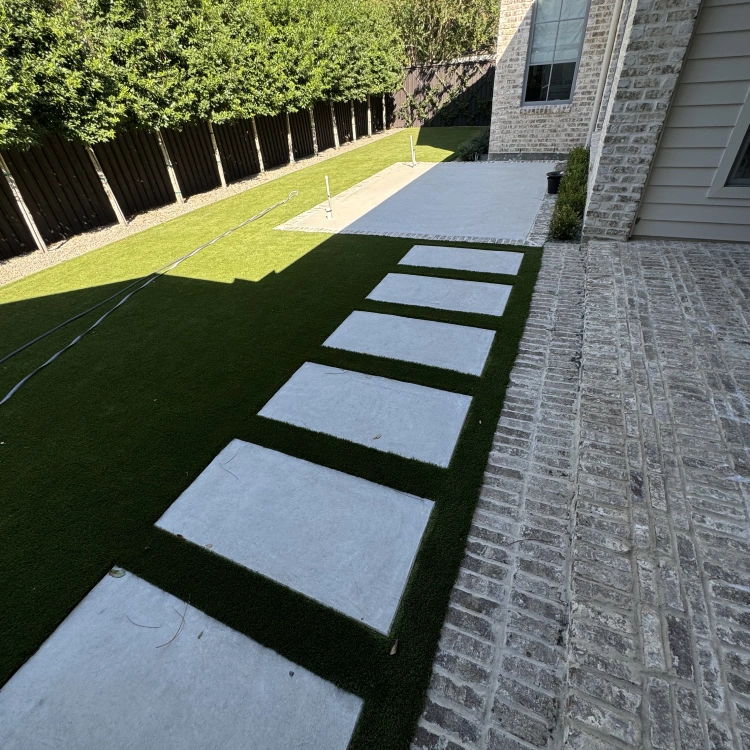
Concrete resurfacing rebuilds the wear layer of an existing slab without tearing it out and pouring new. We pressure wash and diamond grind the existing surface, address cracks and spalled zones with repair mortar, then apply a polymer-modified cementitious overlay or a durable sealer depending on the slab condition and how you plan to use it. When it is done right, you end up with what looks and performs like a new slab on top of the old foundation you paid for years ago.
The category splits into two approaches. Overlay resurfacing uses a 1/8 to 3/8 inch cementitious layer that bonds to the prepped slab and can be stamped, scored, or dyed like fresh concrete. Sealer resurfacing uses a penetrating or film-forming sealer to protect and visually refresh a slab that is structurally sound but weathered. We pick the approach based on what the slab needs and what you want out of it.
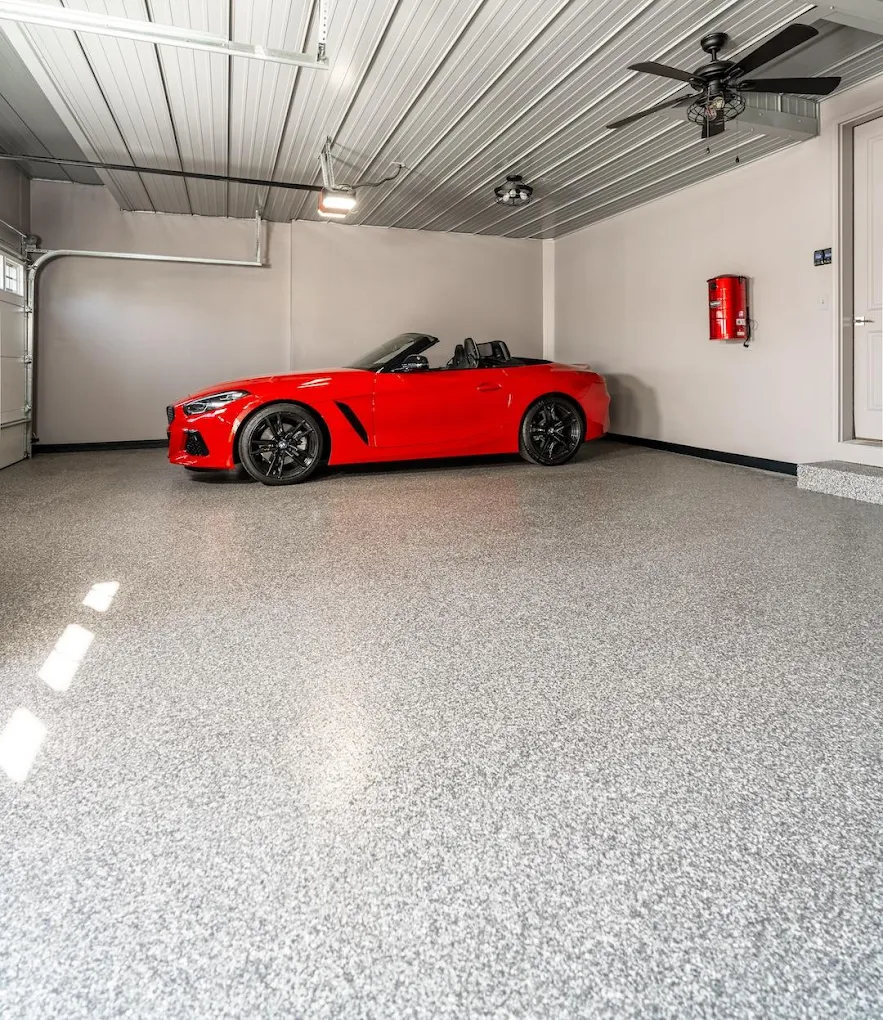
Most of our resurfacing work in Houston is driveways, pool decks, walkways, and covered patios. Those are the places where the sun, rain, and freeze-thaw cycling wear the surface faster than the structure. We also resurface garage floors that are too damaged for a standard coating to adhere to but are still structurally sound. In every case we run a candidacy check first. Some slabs are not resurface candidates, and we will tell you that instead of taking your money for a job that will fail.
The honesty piece matters here. Resurfacing makes sense when the slab is structurally solid with surface wear. It does not make sense when the slab has deep structural cracks, heaving from subgrade settlement, or hydrostatic pressure pushing water through from below. On those jobs the only real fix is remove and replace, and a resurface layer applied over the problem will fail within a season. We have turned down plenty of resurfacing jobs after walking the slab. Saving you money by recommending a full replacement is cheaper than wasting your money on a resurface that is doomed. Send us photos and we will give you the real answer.
“I turn down at least a third of the resurfacing jobs I walk. Not because I do not want the work, but because the slab is too far gone to hold the overlay. I would rather tell you to replace than take your deposit on a project that is going to call me back in four months.”Justin Thurmon, Owner
Four stages. Candidacy first.
Every resurfacing project starts with a candidacy check. If the slab cannot hold an overlay or a durable sealer, we say so on the quote. Assuming the slab passes, the install follows the same four-stage flow.
Candidacy Check
Walk the slab. Evaluate cracks, subgrade, moisture, and surface wear. Decide overlay vs sealer or recommend replacement.
Clean & Repair
Pressure wash, diamond grind, chip repair on spalled zones, joint and crack sealing with flexible filler.
Overlay or Seal
Apply polymer-modified cementitious overlay or penetrating sealer depending on slab condition and intended use.
Finish & Cure
Stamp, score, dye, or leave trowel finish. UV-stable topcoat for exterior. Cure window matched to weather.
The honest answer depends on the slab.
Contractors who sell resurfacing as the answer to every aged slab are selling a service, not a solution. The real decision tree is simpler: resurface if the slab is structurally sound with surface issues, replace if the slab has structural problems or subgrade failure. Here is how we walk that decision at the quote.
A driveway with shallow spalling, faded color, and a few surface cracks is a classic resurface candidate. Overlay bonds to the cleaned slab and gives you a new wear surface at roughly half the cost of a replacement. A driveway with deep heaving cracks, obvious subgrade settlement, or sections that have dropped more than a quarter inch below the neighboring slab is a replacement job. Overlay applied to a heaving slab will crack in the same places the underlying slab is cracking because the overlay is bonded to the bad concrete below.
Pool decks and patios follow the same logic. Sun damage, surface roughness, and faded finishes are resurface territory. Hydrostatic pressure forcing water up through the slab or persistent joint heaving is replacement territory. We walk the slab, push on the edges, look for soft spots, and measure any elevation changes across the slab before quoting.
How We Decide
The questions we get on every aging slab.
How much does resurfacing cost versus replacing?
Resurfacing typically runs 40 to 60 percent of the cost of a full tear-out-and-pour replacement. Exact cost depends on the slab condition, prep requirements, and whether you want a decorative finish on the overlay. That is the short answer. The longer answer is that the right question is not cost but fit. Resurfacing a bad slab is more expensive than replacing it in the long run because the resurface fails and you end up paying for both.
Can my driveway be resurfaced after years of sun damage?
Usually yes, if the underlying slab is structurally sound. Surface spalling, faded color, and weathered texture are exactly what resurfacing handles best. We pressure wash, diamond grind, repair chip damage, and apply a polymer-modified overlay that can be stamped or colored to match your home. Driveways tend to be strong resurface candidates because the structural loads are distributed across the slab rather than concentrated in one spot.
Will the resurfaced driveway look new or will it still show the old slab?
It will look new. A cementitious overlay is a complete new wear surface, not a translucent layer. You can choose a plain trowel finish, a stamped pattern to mimic stone or brick, or a scored geometric pattern, then we seal it for UV and freeze-thaw protection. If you want the texture of a fresh pour with the cost of a refresh, overlay resurfacing is the right tool.
How long does a resurfacing project take?
Most residential driveways and patios run two to four days on site. The overlay needs a cure window before you can drive on it, typically 72 hours for light vehicles and a full week before heavier vehicle loads like trucks or trailers. Pool decks and walkways open faster because the loads are lighter. We publish a schedule at the start of the job and stick to it.
Can you resurface around a pool without draining it?
Yes. We mask the pool edge, protect the tile line, and work the deck in sections so there is no need to drain. Sealer applications are easier than overlay applications here because sealer does not impose a cure window where water cannot touch the surface. For full overlay resurfacing, we coordinate access so the pool stays usable during most of the install. Let us know at the quote if the pool has to stay open during the work.
What is the longest I can expect a resurfaced slab to last?
Properly installed cementitious overlays on structurally sound slabs with the right sealer schedule have lasted 15 years on our clients’ driveways and longer on lower-traffic areas. Sealer resurfacing has a shorter cycle, typically three to five years before reseal, but that is reseal, not replace. The underlying overlay lasts much longer. Our resurfacing work has examples from year one through year ten so you can see how the finish holds up.
Get a quote on your concrete resurfacing project.
Justin or a senior specialist will reach out within one business day. No pressure, no marketing-speak.
- On-site or photo-based quote
- Honest answers about your slab
- Sample boards available on request
Prefer to talk? Call (346) 624-0125
 +30
+30
Slab showing its age?
Free candidacy check. Honest answer on whether to resurface or replace. No pressure either way.
Coverage across the South Houston metro.
Elite Coatings installs this system throughout Harris, Galveston, and Brazoria counties, from Friendswood out to downtown Houston, Pearland, and the Galveston Bay coast. Our service radius is roughly 50 miles from our Friendswood shop.
Not sure if we reach you? Browse all service areas or ask Justin directly.