Patios, pool decks, driveways. Built for Texas sun.
Exterior concrete work in Houston gets one thing wrong more than anything else: contractors repurposing interior systems for the outdoors. We do not do that. Every exterior install runs on UV-stable chemistry, freeze-thaw-rated materials, and a slip profile built for wet shoes and bare feet. Patios, pool decks, driveways, walkways, and covered outdoor living. Sealed for Gulf humidity and occasional Texas freeze.
Sun doesn’t forgive shortcuts.
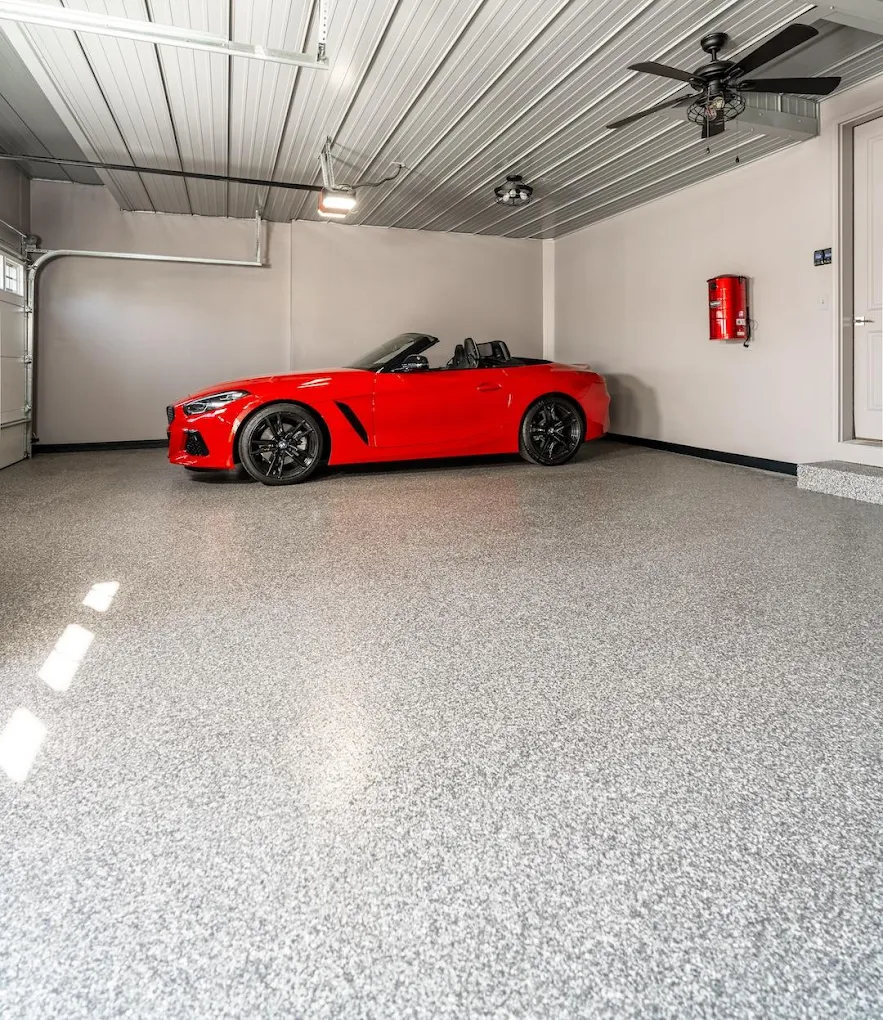
Interior epoxy systems are tuned for temperature-controlled rooms, stable humidity, and zero UV exposure. That is why they look great in garages with closed doors and fail within six months on an unshaded patio. Ultraviolet light breaks down the resin, the topcoat yellows, the surface chalks out, and what was a showroom-grade finish becomes a patchy mess that nobody wants to walk on. Most of the “failed patio coating” photos homeowners send us are the result of interior chemistry applied outdoors by a contractor who did not know the difference or did not want to tell the client.
We treat exterior as a different category with its own material library. UV-stable polyaspartic topcoats for coated systems. Exterior-rated acrylic or silane-siloxane sealers for sealed or polished concrete. Freeze-thaw-rated polymer-modified overlays for resurfacing work. Every exterior bid we write calls out the chemistry explicitly so you know what you are getting. If a competitor’s bid is cheaper and does not name the system, that is usually because they are planning to use interior product on your outdoor slab.
Houston adds two specific variables to the outdoor equation. Humidity is brutal year-round, which means slab moisture readings are higher and curing windows are longer than a textbook would predict. Gulf sun is intense, especially on south and west-facing patios and driveways, which accelerates UV degradation on anything not properly rated. We occasionally get surprise freezes, and while it is rare, a single freeze-thaw cycle on a poorly-sealed slab can cause surface spalling that sets the floor back years. All three factors get baked into our spec.
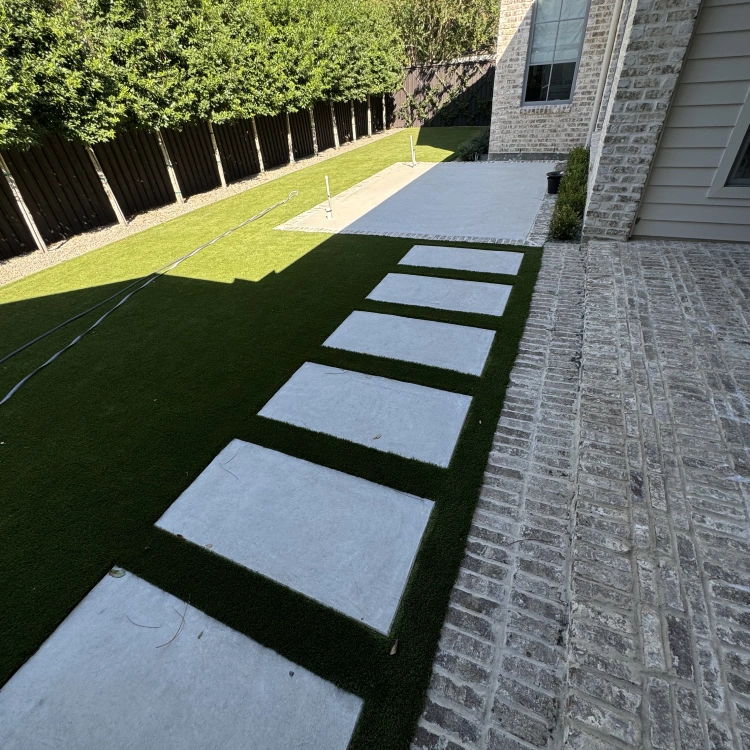
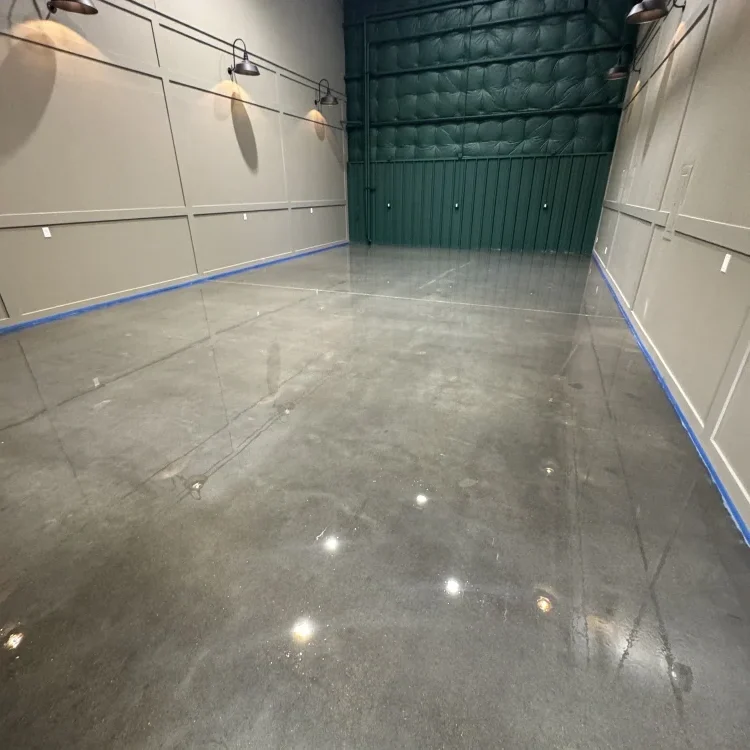
The most common exterior projects we run are residential pool decks, covered back patios, uncovered front walkways, and driveways that need either a full overlay or a durable protective sealer. Polished concrete also holds up well outdoors when sealed properly, which is how we handle modern architectural patios. Stamped and decorative exterior work uses the same chemistry with sealer upgrades. Our exterior portfolio has examples across all of these.
“The simplest way to tell a good exterior coating from a bad one: ask what product is going on top. If the contractor cannot name the sealer chemistry and tell you why it is UV-stable, they are probably using leftover indoor material outside. That is how patios end up looking terrible after one summer.”Justin Thurmon, Owner
Four stages. Weather watched carefully.
Exterior installs are weather-sensitive in a way that interior installs are not. We watch the forecast for the entire cure window, schedule around rain, and rebuild the timeline if needed to protect the finish. That attention is why our exterior work holds up.
Prep & Power Wash
Pressure wash, diamond grind where needed, repair chip damage and control joints. Full contaminant removal.
Moisture & Weather Check
Slab moisture reading, 48-hour forecast review, humidity check. Reschedule if conditions are out of spec.
Apply System
Coating body coat, overlay, polish, or sealer depending on the project. All products UV-stable and exterior-rated.
UV-Stable Seal
Two-coat exterior-rated sealer with slip additive as needed. Full cure window protected from rain and foot traffic.
The three forces that kill bad exterior work.
Every exterior system we spec has to hold up against three Houston-specific forces: intense UV exposure, Gulf humidity, and occasional freeze-thaw cycling. Any one of those will eventually destroy a coating that was not built for it. Together they turn a poorly-spec’d patio into a resurface-or-replace decision within three years.
We counter all three with chemistry and sequence. UV gets handled by exterior-rated polyaspartic or silane-siloxane sealers that do not yellow or chalk. Humidity gets handled by extended cure windows and moisture testing that catches hydrostatic pressure before the coating goes down. Freeze-thaw gets handled by flexible polymer-modified overlays for resurfacing and breathable sealers that let vapor escape without trapping it.
The panel on the right shows how each factor affects exterior concrete and what we do about it. If your existing patio shows any of the symptoms described, that is what failed. Tell us and we will work out whether a resurface, re-seal, or full replacement is the right call.
Three Failure Vectors
Symptom: yellowing, chalking, color fade. Fix: UV-stable polyaspartic or silane-siloxane sealer. Standard polyurethane yellows within 12 to 24 months outdoors and should never be used on exposed patios.
Symptom: coating lifts from underneath, blisters along joints, moisture-pressure blow-off. Fix: calcium-chloride testing, breathable exterior sealer, moisture mitigation layer where required.
Symptom: surface spalling after cold snaps, cracks widening along joints. Fix: flexible polymer-modified overlay for resurfacing, breathable sealer that lets vapor exit without trapping water during freeze.
Not a long-term vector but a short-term one. Any rain in the cure window ruins the finish. We watch the 48-hour forecast and reschedule if the risk is high. Nobody loses the patio to a surprise thunderstorm on our watch.
The questions every patio quote covers.
Can I use the same epoxy system on my patio that I have in my garage?
No. Interior epoxy chemistry yellows and breaks down under UV exposure. You need either UV-stable polyaspartic, exterior-rated silane-siloxane sealer, or a polymer-modified overlay designed for outdoor use. Anyone offering to run interior product on your patio is either underinformed or deliberately selling you a floor that will fail. The cost difference is usually a dollar or two per square foot, and it is always worth it.
How slippery is an exterior coating when wet?
Default finishes are slip-rated for typical patio use. For pool decks, high-traffic pathways, or areas with bare feet and wet tile, we add aluminum oxide or silica slip additives to the topcoat or sealer. The additive can be dialed in from mild to aggressive depending on the space. We discuss slip profile at every exterior quote because falling on a pool deck is a real risk and we build the system to eliminate it.
How often do I need to reseal an exterior concrete finish?
Typically every three to five years on heavily sun-exposed surfaces, longer on covered patios and shaded walkways. Reseal is a short job: pressure wash, light surface prep, two-coat sealer application. It costs a fraction of the original install and extends the life of the floor indefinitely. We build a reseal schedule into our warranty documentation so you know what to expect and can budget for it.
Can you work around an occupied pool or patio?
Yes. We mask the pool edge, protect tile lines, and phase the work so the pool stays usable during most of the install. For pool decks we typically schedule one-side-at-a-time for large decks, or handle smaller decks in a single closure with alternate pool access. Send us photos and dimensions and we will recommend the least disruptive sequence.
Do freeze events in Houston actually affect exterior concrete?
Yes, and more than most homeowners realize. Houston sees one to three hard freezes most winters, and those cycles matter. Water that absorbs into an unsealed or poorly-sealed slab expands on freezing and produces surface spalling, microcracks, and visible damage. A properly-sealed exterior slab lets vapor escape without trapping liquid water, so freeze-thaw cycling does not damage the surface. That is the single biggest reason we insist on breathable exterior sealers.
My driveway is cracked and faded. Can you restore it or does it need to be replaced?
Depends on the cause. Surface cracking, fading, and shallow spalling are classic resurfacing candidates. Deep structural cracks, heaving from subgrade settlement, or major elevation changes mean replacement is the honest answer. We walk the driveway at the quote and tell you which bucket you are in. A polymer-modified overlay with a UV-stable sealer on top can add 10 years to a sound driveway at half the cost of a full replacement. See our resurfacing page for the full decision tree, or send us photos and we will give you a candid read.
Get a quote on your exterior concrete project.
Justin or a senior specialist will reach out within one business day. No pressure, no marketing-speak.
- On-site or photo-based quote
- Honest answers about your slab
- Sample boards available on request
Prefer to talk? Call (346) 624-0125
 +30
+30
Patio, pool deck, driveway. Built for Texas.
Free exterior quote. UV-stable chemistry. Slip-safe finish. Weather-watched install schedule.
Coverage across the South Houston metro.
Elite Coatings installs this system throughout Harris, Galveston, and Brazoria counties, from Friendswood out to downtown Houston, Pearland, and the Galveston Bay coast. Our service radius is roughly 50 miles from our Friendswood shop.
Not sure if we reach you? Browse all service areas or ask Justin directly.