Friendswood Metallic Epoxy
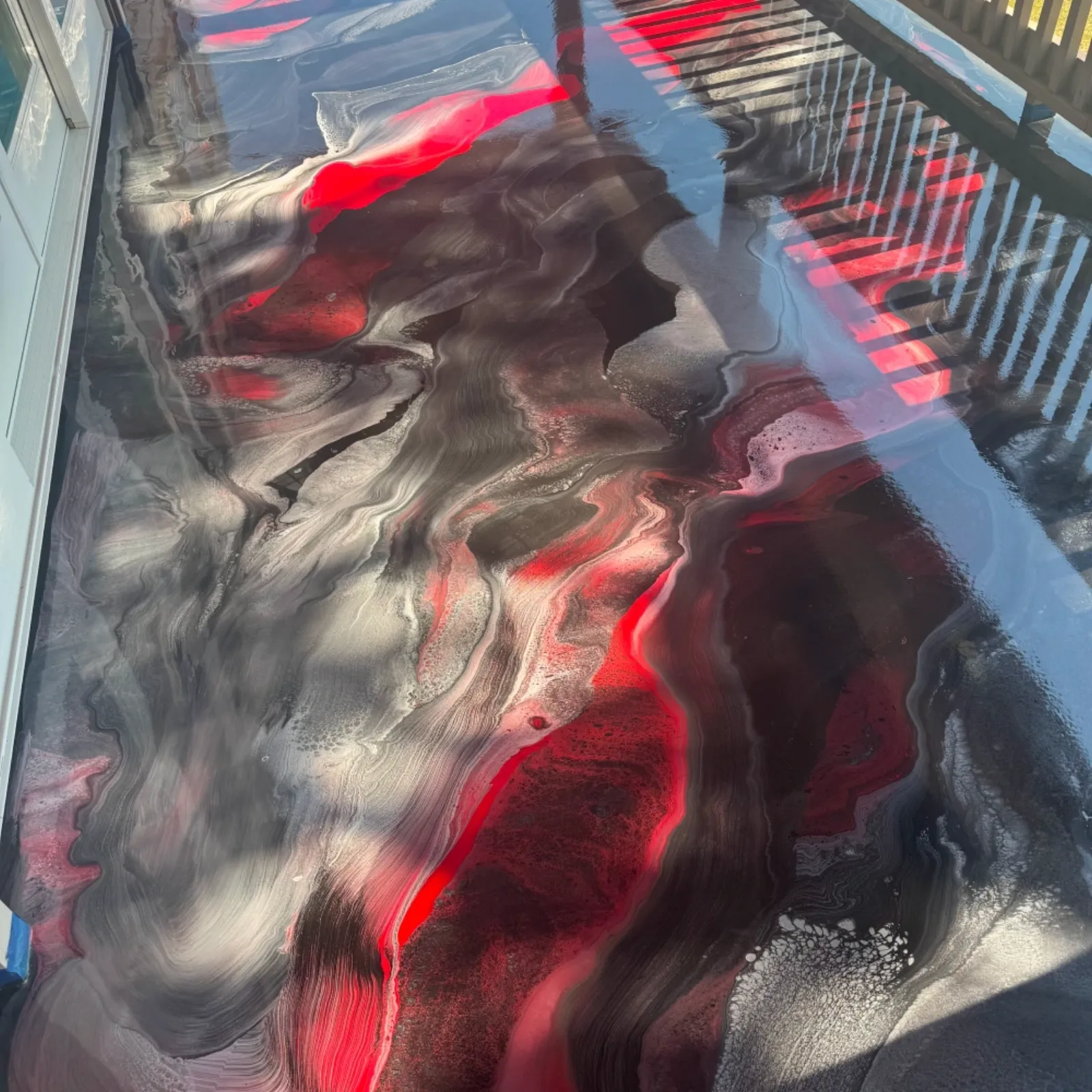
Metallic epoxy is the finish Friendswood homeowners choose when the garage, entryway, or bonus room is meant to be seen. Reflective pearl pigments float in a self-leveling epoxy base and pull into slow swirls that shift as you move across the floor. No two pours are the same, which is exactly the point in a West Ranch custom home where the garage doubles as a showpiece. Elite Coatings hand-pours metallic epoxy across Friendswood and Galveston County in custom color blends, sealed under a chemical-resistant polyaspartic topcoat.
Why Metallic Reads Different Than Flake
Flake epoxy sits on top of the floor: you see the surface and the chips embedded in it. Metallic epoxy invites your eye down into the floor instead. The pearl pigments catch and scatter light at several depths at once, so the finished surface reads like polished stone, poured bronze, or the swirl of oil on water depending on the blend. The pour itself is a craft skill, worked with rollers, torch, and airflow while the epoxy is still wet, and that is why a Friendswood metallic floor feels one-of-a-kind rather than manufactured.
Friendswood’s newer custom homes near West Ranch and Autumn Creek tend to run warm: copper over bronze, gold over walnut, a soft terracotta over amber that plays well against brick and stone exteriors. Cooler blends, silver over pewter or a deep navy over graphite, suit a modern entryway or a media-room floor. We custom-match to your cabinetry, countertops, or exterior palette and build a physical sample board before a single mixing bucket comes off the truck. The pigment choice is what sets the whole character of the floor.
How a Friendswood Metallic Pour Comes Together
Prep is the same disciplined routine as any of our systems: diamond grind, vacuum, joint fill, prime. From there the metallic layer goes down as a self-leveling epoxy with pearl pigment mixed in small batches, and the installer works the wet surface to draw out the pattern before it sets. Once it cures, a polyaspartic topcoat seals everything in and adds the chemical and abrasion resistance the floor needs to survive daily use. A residential metallic runs about two days start to finish, and because the artistry happens in real time, the person doing the pour is the person you talked to about your color.
Metallic Against the Other High-End Options
In Friendswood a residential metallic epoxy runs $9 to $15 per square foot installed. For comparison, polished concrete lands at $4 to $9 but reads more industrial with far less depth, stained concrete at $4 to $8 with a matte look, porcelain tile at $12 to $25 with grout lines and ongoing maintenance, and a real stone slab at $30 to $60 and up. Metallic sits in the sweet spot: it delivers a genuine luxury surface and a floor nobody else on the street has, without stepping into slab-stone pricing. For a custom garage or a statement entry, that value gap is the whole argument.
Ready for Friendswood metallic epoxy floors?
Call us, send a message, or browse our gallery to see real Galveston County projects.
Why Metallic Is Less Forgiving of a Bad Slab
Metallic epoxy punishes shortcuts that a flake floor would hide. A flake broadcast masks minor pitting, trowel lines, and a slightly uneven grind because the chips break up the surface visually. A metallic pour does the opposite: it is a glass-smooth, reflective, self-leveling surface, so every ridge, roller mark, and moisture blister shows. That means the prep has to be cleaner than any other system we install. We diamond-grind the Friendswood slab to a consistent profile, vacuum every speck of dust, and fill and grind every joint and crack flush, because a single high spot or a missed crack will read straight through the finished metallic floor. On a metallic job the prep is not just about adhesion, it is about the look.
Moisture is where metallic gets unforgiving in Friendswood specifically. On slab-on-grade over the clay soil here, vapor drive that a garage-grade flake floor might tolerate will bloom right through a self-leveling metallic layer as a cloudy blister or a soft spot in the pour. So we test slab moisture before every metallic install with a calcium chloride or relative-humidity probe, and a reading over roughly 4 pounds per 1,000 square feet in 24 hours gets a moisture-mitigation primer before the metallic base goes down. Most newer West Ranch and Autumn Creek homes test in range, but we never pour a metallic floor on faith. A lifted or clouded metallic floor is an expensive redo, and it is entirely preventable with the right primer on a damp slab.
What Actually Goes Wrong With a Cheap Metallic Floor
Metallic is the one system where the installer’s hand matters as much as the material, and it is the easiest to get wrong. The pour is worked wet with rollers, a torch to release trapped air, and controlled airflow to draw the swirl, all inside a short window before the epoxy sets. A crew that mixes too much at once, torches too aggressively, or lets a fan blow dust across the wet surface leaves a floor with dead flat patches, pinholes, fisheyes, or dust nibs frozen into it forever. There is no touching it up afterward, the pattern is locked when it cures. That is why we send the person who talked to you about your color to do the pour, and why we control the work zone tightly on a Friendswood metallic job.
The topcoat is the other place a bargain metallic cuts corners. A real metallic floor gets sealed under an aliphatic polyaspartic clear, which is UV-stable and abrasion-resistant, so an open Friendswood garage door does not amber the finish and daily use does not scratch through to the color. A cheaper build seals in a plain epoxy clearcoat that yellows within five to ten years, dulling the whole floor and washing out the pearl. Because the metallic layer underneath is expensive to redo, protecting it with the right topcoat is not the place to save money. When our polyaspartic topcoat eventually wears years down the road, we can sand and recoat the clear without touching the metallic beneath it.
Friendswood Metallic Epoxy FAQ
Friendswood Metallic Epoxy FAQ: What does a metallic floor cost?
Metallic runs $9 to $15 per square foot installed in Friendswood. A 400-square-foot bonus room or entry lands around $3,600 to $6,000, covering prep, the metallic layer, and the polyaspartic topcoat. A full three-car garage scales from there. Every number follows an on-site measurement.
Friendswood Metallic Epoxy FAQ: Will it look exactly like the sample board?
The color and tone will match your sample closely, but the exact swirl pattern is unique to every pour because it is worked by hand while wet. The sample board shows you the color family and the range of movement to expect, not a photocopy of the final floor.
Friendswood Metallic Epoxy FAQ: Does Gulf Coast humidity affect a metallic pour?
Slab moisture is the thing we watch. We test every Friendswood slab before pouring, and a reading above 4 pounds per 1,000 square feet over 24 hours calls for a moisture-mitigating primer. Most homes in West Ranch and the newer developments test in range; older slabs sometimes need the extra layer.
Friendswood Metallic Epoxy FAQ: How long will it last?
A polyaspartic-sealed metallic floor lasts 15 to 25 years in a residential setting. When the topcoat eventually shows wear, we can sand and re-topcoat without disturbing the metallic layer underneath, which adds another decade or more of life.
Friendswood Metallic Epoxy FAQ: Can you pour over my existing coated floor?
Sometimes, but only after an adhesion test. Often the old coating has to come off entirely so the metallic bonds to bare concrete, which gives the cleanest result and the truest color. We test the existing floor before we ever quote the job.
Friendswood Metallic Epoxy FAQ: Why does prep matter more for metallic than for flake?
Because metallic is a smooth, reflective, self-leveling surface, it shows every flaw the way a mirror does. A flake broadcast hides minor pitting, trowel lines, and small grind inconsistencies, but a metallic pour reflects them straight through. So we grind to a consistent profile, vacuum every speck of dust, and fill and grind every joint flush before pouring. A high spot or a missed crack that a flake floor would swallow will read permanently in a metallic floor, which is why our metallic prep is the most exacting of any system we install in Friendswood.
Friendswood Metallic Epoxy FAQ: What separates a good metallic pour from a bad one?
The hand doing it. Metallic is worked wet with rollers, a torch, and airflow inside a short window, and a crew that mixes too much, torches too hard, or lets dust settle on the wet surface leaves dead patches, pinholes, or nibs locked in forever, because the pattern cures permanently. We send the person who discussed your color to do the pour and control the work zone tightly. The other tell is the topcoat: a real metallic gets an aliphatic polyaspartic clear that stays UV-stable, while a bargain build seals in an epoxy clearcoat that yellows and dulls the pearl within a decade.
Other Friendswood Concrete Coatings Services
View all Friendswood, TX services · See our work · Finish My Floor
Get a quote on your Friendswood metallic epoxy project.
Justin or a senior specialist will reach out within one business day. No pressure, no marketing-speak.
- On-site or photo-based quote
- Honest answers about your slab
- Custom color matching on request
Prefer to talk? Call (346) 624-0125
Service Area: Friendswood, TX
We serve all of Friendswood, TX and the surrounding Galveston County neighborhoods, including the custom homes of West Ranch and Autumn Creek.