One Pour, No Undo: Metallic Floors in Rentals, Condos and Showrooms
Metallic epoxy is poured once and cannot be repaired invisibly, because the pattern comes from how the resin moves in the first fifteen minutes and nobody can recreate it. That makes it the right system for a photographed room where damage is unlikely, and the wrong one for a space that takes heavy use. On an island slab the moisture test underneath it is the most important number on the proposal.
Metallic gets specified on Galveston for a reason nobody says out loud: the room is going to be photographed. Vacation-rental interiors, boutique retail on the Strand, restaurant and bar floors along the seawall. Those spaces get chosen partly on how they look in a listing image, and a poured metallic floor does something no other system does at any price. That is a legitimate reason to buy it. It is also why the decision needs more care here than inland.
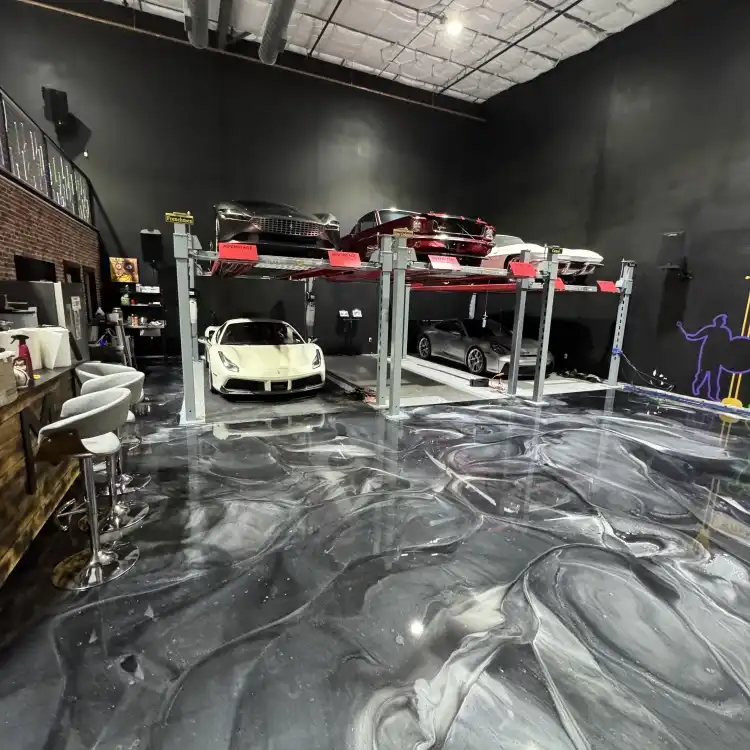
What Makes the Pattern, and Why It Cannot Be Repeated
Metallic epoxy is a pigmented resin carrying metallic particles that migrate as the resin moves and settles. What you end up looking at is a record of that movement, frozen at the moment the material gels.
That is why no two floors match, and why nobody can promise a specific figure from a photograph. We can match a palette and the general character of a floor you liked. We cannot match the veining, and neither can the installer who poured the original.
Anybody promising an exact match is telling you what you want to hear. It is worth knowing that before signing, because the gap between the reference image in your head and the floor on the ground is where disappointment lives on this system. Bring images to the walkthrough by all means. Treat them as direction rather than a specification.
The Slab Underneath Decides Everything Here
Unrepeatability is exactly why what is under a metallic floor matters so much on this island. A blister from vapor pressure cannot be patched invisibly, because the surrounding pattern cannot be recreated.
The options once that happens are re-pouring the section with a visible boundary or re-pouring the whole room, and both are expensive ways to learn that the moisture test was not optional. Island slabs sit close to the water table and push vapor upward, which is the condition that causes it.
So on Galveston we treat the moisture barrier as part of the metallic system rather than an add-on. The test comes first, the barrier primer goes down where the numbers call for it, and only then does the decorative layer get poured. We will not pour metallic on an island slab without testing first, even when a client asks us to skip it, because we are the ones who have to come back.
Flatness is the other prerequisite. Metallic is thin and self-levelling, so every low spot and old trowel mark telegraphs through. Grinding is most of the job on this system.
Sun Through the Windows
The rooms that suit metallic on this island tend to be the rooms with glass, which creates a specific problem. Standard epoxy ambers under UV, and Gulf light is harsh.
On a light pour that yellowing shows badly and it shows early. A pale gray or a soft blue-white floor that has gone warm in the window line is not something you can polish out, because the discoloration is in the topcoat itself.
Every floor of ours getting real daylight gets a UV-stable topcoat. If a quote for a sunlit island room does not mention UV anywhere, that is a genuine gap rather than a missing detail, and it is worth asking about directly before comparing numbers.
Humidity is the companion issue. It affects cure time and finish rather than ruining a floor, provided the crew plans for it. In an enclosed space we run dehumidification through the pour and the cure. In an open or semi-open space we schedule around the weather. A crew that pours regardless of conditions is how a metallic floor goes wrong on this island.

Scheduling Around Turnover
A metallic pour runs three to four working days for a normal room, with cure time between coats, and light foot traffic usually the day after the final topcoat. Island humidity stretches those numbers.
For a rental that means the work needs a real gap in the calendar rather than a Tuesday between guests. We schedule the pour itself around the weather rather than the calendar, so a booking on either side of a tight window is a risk we would rather you not take.
The practical approach on the island is to put this work in the quiet stretch, when the property is not turning over weekly anyway. That gives the floor its cure time, gives us room to wait out a humid day, and means nobody is standing on a floor that has not properly hardened because a cleaner needed access.
Tell us your booking pattern at the walkthrough. It changes what we recommend as much as the room does, and on some rentals it is the reason we recommend a different system entirely. The Galveston metallic epoxy page has the full build sequence.
Where We Will Tell You Not To
Metallic cannot be spot-repaired. A gouge, a blister or a deep scratch cannot be blended, because the surrounding pattern is unrepeatable by anyone. Anybody who says otherwise has not had to do the repair.
So for a showpiece space where damage is unlikely, it is the right system and nothing else looks like it. For a ground-level garage that floods, a rental with heavy turnover, or a working shop where tools get dropped, we recommend flake instead and explain why rather than selling the more expensive floor.
The conversation at the walkthrough is as much about where metallic does not belong as where it does. That is not us talking ourselves out of work. It is the difference between a floor somebody photographs for years and one they resent by the second season.
Gloss is worth one more note. A metallic with no additive is slick when wet, and on this island floors get wet. Where that matters we add fine texture to the topcoat, which costs a little reflection clarity and makes the floor safe to walk on. In a dry interior showroom we leave it smooth.
What Owners Ask Before Committing
Can you match a floor I saw online?
We can match the palette and the general character, not the pattern. The veining comes from how the resin moves in the first fifteen minutes and it is genuinely unrepeatable, including by the installer who poured the original.
What happens if it blisters?
That is the failure we design against here, and it comes from vapor pressure under an unbarriered slab. It cannot be patched invisibly because the pattern cannot be matched. This is precisely why we test before pouring on any island slab.
Can you pour over the tile that is in there now?
Not directly. Tile has to come up or be ground back to a sound substrate, because any hollow or movement telegraphs through a thin metallic layer within months. On the island there is a second reason: tile can hide a moisture problem we need to measure first.
Talk it through before the pour
Tell us the room, the light it gets, and how often it turns over. We test the slab first, because that number decides whether metallic is the right system at all.
Finish My Floor Call Justin (346) 624-0125Poured island floors are in the gallery, or send over the room details and we will come out to price the work.