Kemah Concrete Resurfacing
A lot of concrete around Kemah is tougher than it looks. The top layer is what wears out first. Salt air eats at it, sun fades it, and water sitting after a storm works into every pore until the surface starts to flake. When the slab underneath is still solid, there is no reason to tear it out. We repair what is broken, rebuild the surface and seal it. And if a slab really is done, we say so on the first visit.
Resurface or replace: an honest read
The question we hear most on resurfacing calls is whether the slab is worth saving. The slab answers that, and we go by what it tells us. Surface problems like flaking, fading, rough patches and shallow spalls are resurfacing work. Structural problems are different. A section that has sunk, a crack that keeps getting wider, or a slab that rocks when you step on its edge all mean the base has moved, and a new surface on top would crack right along with it.
On the walkthrough we tap the surface to find hollow spots, measure any height change across the joints, and look at where water sits after rain. We also run a calcium-chloride moisture test, because a bay-side slab resting on wet clay can push moisture up into anything we put on it. If the base is good, we resurface. If it is not, you get that answer in plain words, and the quote says replace.
The repair work nobody sees
Unless you’re standing there while we’re doing it, you’ll never see the part that actually matters. The prep. That’s where a floor lasts or fails. The fancy part is just the last 20% of the job.
Justin, Elite Coatings
On a resurfacing job that goes double. Before any overlay or sealer touches the concrete, we pressure wash it, then diamond grind to open the surface so new material has something to grab. Spalled spots get chipped back to solid concrete and filled with repair mortar. Cracks are cut open, cleaned out and filled with a flexible material, so normal movement does not telegraph up through the new top.
Edges get the same attention as the middle. The border of a walk or the lip of a pool deck is where water gets in first, and it is where a new surface lets go first if it was never tied in properly. We grind and patch those edges with care. None of this shows once the job is finished, which is exactly why rushed crews skip it.
What salt air and standing water do to a walk
Concrete is porous. Near the bay, salt rides in on the air, settles on walks, drives and pool decks, and soaks into the surface with every rain. As that salty water dries, it crystallizes inside the top layer and pries tiny flakes loose. Over a few seasons a smooth broom finish turns rough and pitted, the color goes chalky, and the stone in the mix starts to show through. That is surface spalling, and it happens to be the kind of damage a resurface handles best.
Standing water speeds it up. The clay under Kemah slabs holds water after heavy rain, so low spots in a driveway or patio stay damp longer than the rest, and those spots wear out first. When we resurface, we look at drainage too. Sometimes a slight slope correction built into the overlay keeps water moving off the slab where it used to sit.
Pool decks on the bay side get a double dose. Chlorine splash and salt air work on the same surface, and bare feet feel the roughness long before anyone notices it from a lounge chair. A deck that has started scraping heels or snagging towels is usually ready for an overlay with fresh slip texture, even when it still looks fine from across the yard.
Overlay or sealer: how we decide
Resurfacing comes in two forms, and the condition of the slab tells us which one fits.
- Overlay resurfacing. A polymer-modified cement layer, roughly an eighth to three eighths of an inch thick, bonded to the prepared slab. It is a complete new wear surface that covers old stains and patches, and it can be left smooth, broomed, scored or colored.
- Sealer resurfacing. A penetrating or film-forming sealer over a cleaned and repaired slab. It refreshes the color, locks out salt and water, and keeps the original look of the concrete. It suits slabs that are weathered but still smooth.
Heavily pitted or patched concrete usually needs an overlay, because a sealer would only make the damage shinier. A walk that has faded but kept its surface is a good sealer candidate. Pool decks lean toward an overlay with slip texture, since bare feet and chlorine are hard on a worn top. Either way, the outdoor topcoat is UV-stable so it holds its color in Gulf sun.
The front walk, and working around bay weather
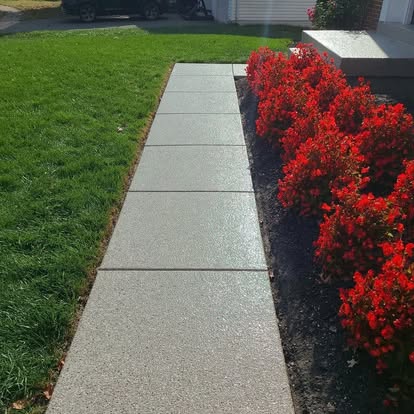
That walk in the opening photo is a small job with an outsized payoff. A front walk is the first thing a visitor steps on and one of the first things anyone sees from the street. Refinishing one goes faster than most people expect, and the change from flaking gray to a clean, sealed surface is hard to miss when you pull into the driveway.
Weather is the part we plan hardest. An overlay or sealer cannot take rain while it cures, and bay weather can turn in an afternoon. We watch the forecast through the whole cure window and move the date if the risk looks high. Overlays also need several days before a car can drive on them, so on a driveway job we sort out parking with you ahead of time.
Wondering if your walk or deck can be saved?
Set up a quote visit. We will sound the slab, test it for moisture and tell you which way to go.
Resurfacing questions we answer on the walkthrough
Can a resurfaced slab hide old patches and stains?
An overlay can, because it is a full new wear surface over the old concrete. A sealer cannot. It soaks in and deepens the existing color, so patches and stains stay visible. If hiding old repairs matters to you, tell us at the start so we plan for an overlay.
Will cracks come back through the new surface?
Cracks that are still moving can. We open and fill cracks with a flexible material and carry existing control joints up through the overlay, so the slab can move where it wants to. Hairline shrinkage cracks are usually stable and stay hidden once they are repaired.
Is a resurfaced pool deck safe for bare feet?
Yes, when it is built for it. We add slip texture to the topcoat, use chemistry rated for chlorine contact, and keep colors on the lighter side so the surface stays cooler underfoot. The coping and tile get masked off, so the pool does not need to be drained.
How can I tell if the base under my driveway has failed?
Look for sections that have sunk or tilted, cracks that are wider at one end, and spots that sound hollow when tapped. We check all of those on the visit. A failed base needs fixing or replacement first, because any new surface would crack along with it.
Can you match the color of the rest of my concrete?
We can get close with a tinted overlay or a colored sealer, and we make a small test patch so you can compare before we commit. Exact matches to old, weathered concrete are hard, so many owners resurface the whole connected area for one even look.
Does salt air near the bay shorten how long a resurface lasts?
It can on unsealed concrete. A sealed overlay keeps salt from soaking in, so the new surface wears far slower than the old one did. The sealer is what takes the beating. Once rain stops beading up on the surface, a reseal restores that protection.
Do you resurface concrete for businesses and marinas?
Yes. Restaurant patios, storefront walks along 146 and work areas around marinas and boat storage get resurfaced the same way, with heavier topcoats where traffic is rough. We schedule commercial work around your hours so customers can still get in the door.
Keep going with your Kemah project
Read the main concrete resurfacing page for more on overlays and sealers. Resurfaced walks and decks are in our gallery, the rest of our Kemah services are one click back, and you can ask for a walkthrough whenever the slab is ready to look at.
Ask us to look at your slab.
A couple of photos and a rough size help. We will call to set a time to walk the concrete with you.
- Resurface or replace, said plainly
- Moisture test on every slab
- Photos welcome before the visit
Prefer to talk? Call (346) 624-0125
Bay-side concrete we can reach
From the Kemah Boardwalk to Todville and the homes off NASA Parkway, we resurface concrete all over Kemah and along the bay shore beside it.