Kemah Decorative Concrete
Decorative concrete is for the job where the floor is meant to be looked at. A checkerboard on a covered patio, a scored grid in a dining room, a border that frames an outdoor kitchen. Near the bay those floors also have to live with salt air and bright, changing light. We draw the pattern first, chalk it out on your slab before any color goes down, and build a sample you sign off on. Only then does the crew start on the real floor.
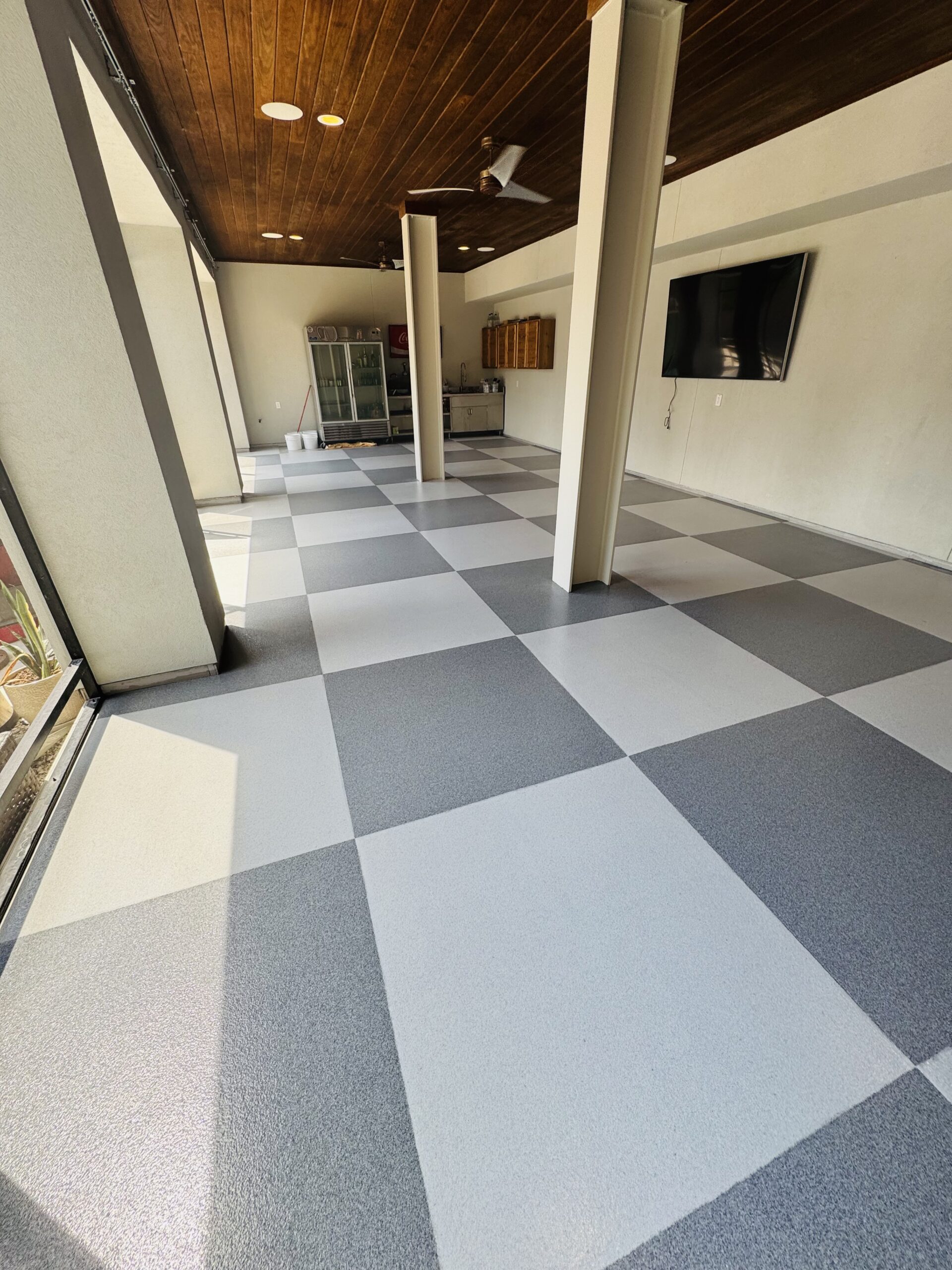
Treat the floor like part of the design
Most floors get picked last and noticed never. A decorative floor works the other way. It gets decided early, alongside the cabinets, the columns and the lighting, because it changes how the whole room reads. A two-color grid makes a long patio feel organized. A dark border pulls a seating area together. One accent band at a doorway tells people where to walk without a sign.
These jobs reach us a few different ways. A homeowner shows us a photo saved on their phone. A designer sends a drawing with dimensions. A restaurant owner wants the dining room floor to match the rest of a build-out. Each one starts the same: we look at the space, talk through how it gets used, and check whether the slab is sound enough to carry a pattern. A decorative finish on a cracked, shifting slab shows every flaw, so repairs come before anything pretty.
Getting the pattern to land square
The checkerboard at the top of this page works because every square meets the columns cleanly. Nobody gets that by accident. Slabs are rarely square to the walls, columns sit a little off grid, and doorways almost never fall on a neat multiple of the square size. If a crew starts in one corner and works outward, the error piles up at the far wall, and you end up with a sliver of a square against the most visible threshold in the room.
Before any color goes down, we snap the layout on the bare slab and walk it with you:
- Sightline first. We find the view people see most, usually from the door you use every day, and start the grid from there.
- Columns and posts. Squares get sized so each column sits in the middle of a square or right on a line, never on an awkward fraction.
- Thresholds. Doorways and the open edge get a full square or a border, so the pattern looks finished where people step in.
- Existing joints. Control joints crack where they want to, so we fold them into pattern lines instead of painting across them.
Once the lines are down, we tape and coat one color at a time, letting each pass set up before the next one gets masked. That is slower than rolling one color across the room, and it is the only way to get a crisp edge where two colors meet. Tape comes up at the right moment, before the coating fully hardens, so the line stays sharp and the edge does not tear. A two-color patio means at least two of those rounds.
A sample before anything is permanent
Color on a phone screen and color on your concrete are two different things. Light near the water is bright, and it shifts through the day, which changes how a gray or a tan reads underfoot. So every decorative job gets a sample made with the exact materials and method we plan to use, set out where the floor will be. Look at it in the morning, then again at dinner. If something is off, we change it.
Most people adjust something once they see the sample. A gray goes a shade lighter. A border gets thinner. Once in a while the whole idea changes after seeing it at full size, and that is the reason to do it. Redoing a sample takes an afternoon. Redoing a finished floor means grinding it off.
Have a pattern in mind for a patio or dining room?
Send the photo or the drawing. We will come out to measure, look over the slab and set up the sample.
Two tones, scored lines or one field color
Not every decorative floor needs a pattern across the whole slab. A single field color with a contrasting border can look more finished than a busy grid, especially in a smaller room. Scored lines, which are shallow saw cuts in the concrete, give a tile look with no grout to scrub. Two-tone checkerboards and stripes are the most noticeable option, and they need the most careful layout of the three.
On a covered patio, think hard about the open side. The few feet nearest the yard catch direct sun most afternoons, and strong UV fades some pigments faster than others. We choose colors that hold up in that strip and finish every outdoor or half-covered decorative floor with a UV-stable topcoat, so the squares under the roof and the squares near the edge age at the same rate. Very dark colors also run hot and show dried salt, which is why we usually steer bay-side patios toward mid tones.
Feature floors for boardwalk restaurants and shops on 146
A restaurant or retail floor is part of the brand. Diners on the Kemah Boardwalk notice a patterned entry or a logo color worked into the dining room, and a clean border makes a small storefront along 146 feel planned. Commercial pattern work comes with extra rules, though. The floor takes mopping every night, rolling carts and wet shoes in from the rain, and it has to stay slip-rated in the areas an inspector checks.
We build commercial pattern floors with a heavier topcoat and add texture in the wet zones, so the design carries through and the grip is still there. Gloss level gets picked for the room and its lighting. Installs usually run after closing so you keep your service days, with the layout and sample approved well ahead, which means the night of the install brings no surprises.
Questions about patterns, colors and layout
Can you match a pattern from a photo I saved?
Usually, yes. Send the photo with rough room dimensions and tell us whether the space is indoors, covered or open to the sky. We will tell you what is realistic in concrete, what we would change for your room, and then build a sample from it before the main floor starts.
What size should the squares be in a checkerboard?
That depends on the room and on what stands in it. We size squares so columns, doors and the open edge land cleanly, and that usually settles the size for us. Bigger squares calm a large patio. Smaller ones suit a narrow space but take more layout time.
Will the pattern fade on a covered patio?
The part under the roof holds color well. The strip near the open edge gets more sun, so we pick pigments that resist fading and finish the floor with a UV-stable topcoat. Resealing on schedule is what keeps both halves matching as the years go by.
Can decorative work go over my existing patio slab?
If the slab is sound, yes. We grind it, repair cracks and fill any spalled spots, then build the pattern on top. Old sealers and paint come off first. A slab that is heaving or badly cracked needs repair or replacement before a decorative finish makes any sense.
How many colors can one floor have?
As many as you want in theory, two or three in practice. Each color adds a masking and coating pass, plus more chances for a crooked line. Most of the floors people still love years later use two colors and a clean border, and let the pattern do the work.
Can you put our logo in a restaurant floor?
Yes. Logos and lettering are laid out from your artwork, sampled first, and sealed under a heavy topcoat so they handle mopping and foot traffic. We keep a logo out of the busiest walking path when the room allows it, which helps it stay crisp longer.
Does a pattern add time to the job?
Yes, mostly in the layout, the sample and the extra masking passes for each color. A single-color floor goes faster. You get a written schedule before work starts, and because the sample is approved first, the dates on that schedule tend to hold.
Other finishes for Kemah slabs
The decorative concrete service page goes deeper on stamping, scoring and inlays. You can also see all of our Kemah work, look through patterned floors in the gallery, or book a sample visit for your own space.
Show us the floor you have in mind.
Attach a reference if you have one. We will call to talk about the room and pick a time to come measure.
- Layout walked on your slab
- Sample approved before work starts
- Indoor, covered or open-air spaces
Prefer to talk? Call (346) 624-0125
Kemah and the bay shore we cover
Our decorative work reaches the boardwalk restaurants, the shops along 146, and homes from NASA Parkway out to the Todville waterfront.