Stained Concrete on the Bay: Why the Sealer Does Most of the Work
Stain soaks into concrete and changes its color from the inside, so it cannot peel the way paint does. The layer that faces the sun and salt air is the clear sealer on top, and resealing is the real upkeep. Run a test patch first, because every slab takes stain its own way, and a damp bay-side slab takes it differently again.
Stained concrete has a reputation for being low maintenance, and that is about half true. The color itself is as permanent as anything we put down, because it is in the concrete instead of sitting on it. What wears is the clear coat over it. Owners who understand that split end up happy with their floors for a long time. Owners who expected a stain-it-and-forget-it floor end up calling us about a dull, thirsty surface that looks nothing like the day it was finished.
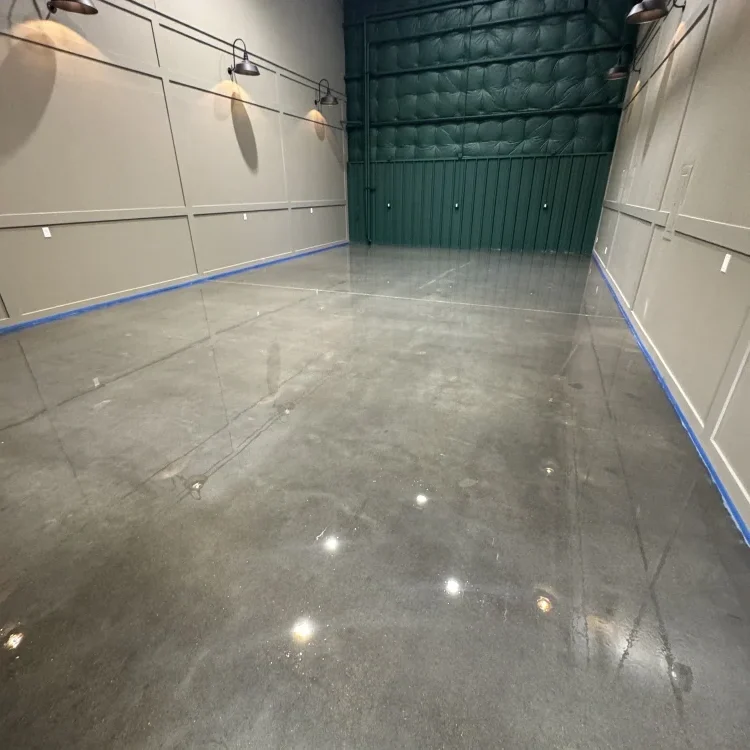
Stain Soaks Into the Slab Itself
A coating sits on concrete like a skin. Stain soaks into the surface and changes the color of the concrete itself, so there is no film to chip or peel off later.
That has two consequences worth knowing before you choose it. First, stain hides nothing. Patches, old repairs, trowel marks and the swirl where somebody once dragged a pallet all show through, sometimes more clearly than before, because each one takes the color a little differently. If you want a perfectly even floor, stain is the wrong product and a coating is the better choice.
Second, stain depends on the concrete being open enough to drink it in. A slab that has been sealed, painted, coated or soaked with grease will take stain unevenly or barely at all. We grind or clean the surface to open it up, then check how it absorbs water before anything else happens. Water that beads up on bare concrete is a sign the stain will bead up the same way.
Acid, Water-Based, and Why No Two Floors Match
There are two main kinds of stain, and they get to color in different ways.
Reactive acid stain reacts with minerals already in the concrete. The color you end up with depends on what is in that particular slab, so the result is mottled and organic, with darker and lighter areas drifting across the floor. People who love stained concrete usually love it for exactly that movement. People who want control usually do not.
Water-based stain works more like a dye that soaks into the surface. The colors are more predictable and the range is wider, though the result is flatter and less marbled than acid.
Either way, no two slabs come out alike. Two patios poured the same week by the same crew will take the same stain differently. That is the material behaving the way it always does. It is also why we never promise a match to a photo or a neighbor’s floor. Both stain types are covered in more depth on our stained concrete page for Kemah.
A Test Patch Comes First
Because the slab decides the color as much as the stain does, we test before committing the whole floor. A test area goes down in a spot that will not show later, usually behind where furniture or equipment will sit, and you judge it once it has been sealed.
Sealed matters. Stain looks very different wet, dry and under a clear coat. A test judged before sealing tells you almost nothing about how the finished floor will look.
The patch also tells us things nobody can see from the surface. How fast the slab soaks up color. Whether an old sealer is hiding in one corner. Whether a patched area is going to stand out like a bruise. Now and then the test shows the slab is a poor candidate for stain altogether, and a coating would serve you better. Far better to know that from a small square than from a whole patio.
Damp Slabs Take Stain Differently
Moisture in the slab changes how stain behaves. On the bay side, the clay holds water from the bay, and that moisture rises up through the concrete. A damp slab can take stain darker in some spots and lighter in others, and the sealer on top can turn cloudy if vapor is pushing up underneath it.
So stained jobs get the same calcium-chloride moisture test as any other floor we put down. A dry reading means we carry on normally. A wet reading changes the sealer choice and sometimes the timing, so the slab gets a chance to dry before the clear coat goes on.
This matters most on covered patios and back-of-house restaurant floors, the two places stain makes the most sense around Kemah. Patios sit on grade and catch blown rain at the open edge. Kitchen floors get mopped and hosed constantly. Both put water against the slab from above as well as from below.
Resealing Is the Real Upkeep
The sealer is the layer facing the sun and the salt air, so it is the layer that wears. Direct Gulf sun breaks down a clear coat over time. Salt in the air settles on it every night. Foot traffic and mopping dull it along the paths people use most.
We use UV-stable sealers on anything that sees sun, because an ordinary clear coat ambers and casts a yellow tint over a stain you picked specifically for its color. Even the right sealer is a maintenance item, though.
The warning sign is easy to spot. When water stops beading on the floor and starts soaking in, or when the traffic lanes look dull next to the corners, the sealer has worn thin. A good clean and a fresh coat bring it back, and the stain underneath comes right back with it, because it never went anywhere. That is a much smaller job than restaining, and it is the job that keeps a stained floor looking the way you wanted.
Stained Concrete Questions From Kemah
Can you match the stained patio my neighbor has?
We can get close in color family, but an exact match is not realistic. Acid stain reacts with the minerals in each slab, so the same product on two patios comes out different. We put a test patch on your slab and seal it so you see what your concrete actually does before the whole floor goes down.
How will I know when the sealer needs redoing?
Pour a little water on the busiest part of the floor. If it beads up, the sealer is still doing its job. If it darkens the concrete and soaks in, the sealer has worn thin there. Dull traffic lanes next to glossy corners are the other giveaway. A clean and a fresh coat fix both.
Will stain cover up old patches and repairs?
No, and it often makes them more obvious. Patch material takes stain differently from the original concrete, so repairs show up as a different shade. If the slab carries a lot of patching, we will tell you at the test stage, and a coating may suit you better than a stain that highlights every repair.
See what your slab does before you commit
Tell us where the floor is and how it gets used day to day. We test the slab and run a sealed sample, then put the quote in writing.
Finish My Floor Call Justin (346) 624-0125Stained and sealed floors are in the gallery. If your sealer has gone thirsty, set up a visit and we will look at what it needs.