Dickinson Commercial Epoxy
Commercial floors in Dickinson mostly mean service garages, small shops and light-industrial spaces along the I-45 corridor. They share one problem: the business cannot simply close for a week. We plan the install around your hours, test the slab for moisture before primer, and pick a topcoat for what actually hits your floor, whether that is motor oil, coolant or the cleaner your crew mops with every night. The schedule and the scope are in writing before we start.
Keeping a working business open while we coat
Most commercial calls start with the same question: how long are we shut down? The answer depends on the floor area and the system, and we work out the sequence with you before anything gets ground. When a bay or a sales floor has to stay in use, we can split the job into phases so part of the space keeps working while the rest cures. Night and weekend installs are available on request, so the grinding, the dust and the smell happen while the doors are locked.
If a general contractor is running a buildout, we coordinate with them directly. Our work fits after drywall and paint and before shelving, lifts or fixtures go in. We would rather settle that order in the schedule than find out the morning we arrive that the electrician still needs the floor. The written quote lists each phase, the cure time between phases, and when every area can take foot traffic and equipment again, so you can tell your staff and your customers what to expect.
What oil, coolant and cleaners do to a shop floor
Tell us what goes in your mop bucket, and we match the topcoat to it.
Bare concrete drinks spills. Oil soaks in and leaves a dark stain that never fully lifts, and coolant and brake fluid work at the surface over time. A plain epoxy topcoat stops the soaking but can still soften or stain under the wrong chemistry. In a service garage or auto shop we use chemical-resistant topcoats rated for the fluids you actually handle, and we ask about every one of them on the walkthrough.
Cleaners matter as much as spills. A crew that mops with a strong degreaser every night can put more chemistry on the floor than the occasional drip from a car on a lift. Tell us what goes in your mop bucket, and we match the topcoat to it. Flake over a chemical-resistant base is a common pick for shop bays, because the chip hides tire marks and the topcoat takes the spills.
Older shop floors bring their own baggage. Years of oil can soak deep enough that a coating will not bond over it until the stained concrete is cleaned out or ground away. We look for those spots on the walkthrough, and if a section needs extra grinding or a degreasing pass, it shows up in the quote as its own line so that prep is plain from day one.
Moisture under a slab that sits near the bay
Dickinson is close enough to Galveston Bay, on clay soil, that slab moisture is a real question on any commercial job. Nobody can tell a dry slab from a damp one by looking at it, so before primer goes down, we test with a calcium chloride kit or a relative humidity probe, let it sit for as long as the test requires, and come back with a number you can look at yourself.
A high reading means a moisture mitigation layer goes under the system. It adds a day, and on a commercial job that day belongs in the schedule from the beginning so nobody is caught off guard halfway through. Humidity is the other half of the story. Galveston County runs above 70 percent for half the year, and that slows how fast polyaspartic topcoats cure. On larger spaces we can install at night, when the building’s HVAC can pull the humidity down, or stage dehumidifiers the day before the topcoat goes on.
Slip texture at bay doors and wash areas
Doorways and roll-up bays are where people slip. Rain comes in on boots and tires, and a smooth, glossy coating gets slick right there. On commercial floors we broadcast slip texture, a fine aggregate, into the topcoat at every entry and in wash areas. The rest of the floor can stay smoother if you want it quicker to sweep.
How much texture depends on who walks on it. A customer area with street shoes needs less than a wash bay where water stands. Heavier texture grips better and takes more effort to clean, so we put the heaviest grit where the water is and ease off elsewhere. You will see and feel a sample board before we commit to a grit.
Need a floor done around business hours?
Ask for a quote visit. We walk the space, test the slab and lay out the schedule in writing.
Flake, solid color, metallic or polished for a customer-facing room
The floor customers walk on says something about the business, so the system choice is partly about looks. Here is how the four options sort out in a commercial space along the corridor.
- Flake. Hides tire marks, dust and small wear between cleanings. The usual pick for service bays, shop floors and back rooms.
- Solid color. A clean, flat look that suits small retail buildouts and utility rooms. It shows dust more than flake, so it wants regular sweeping.
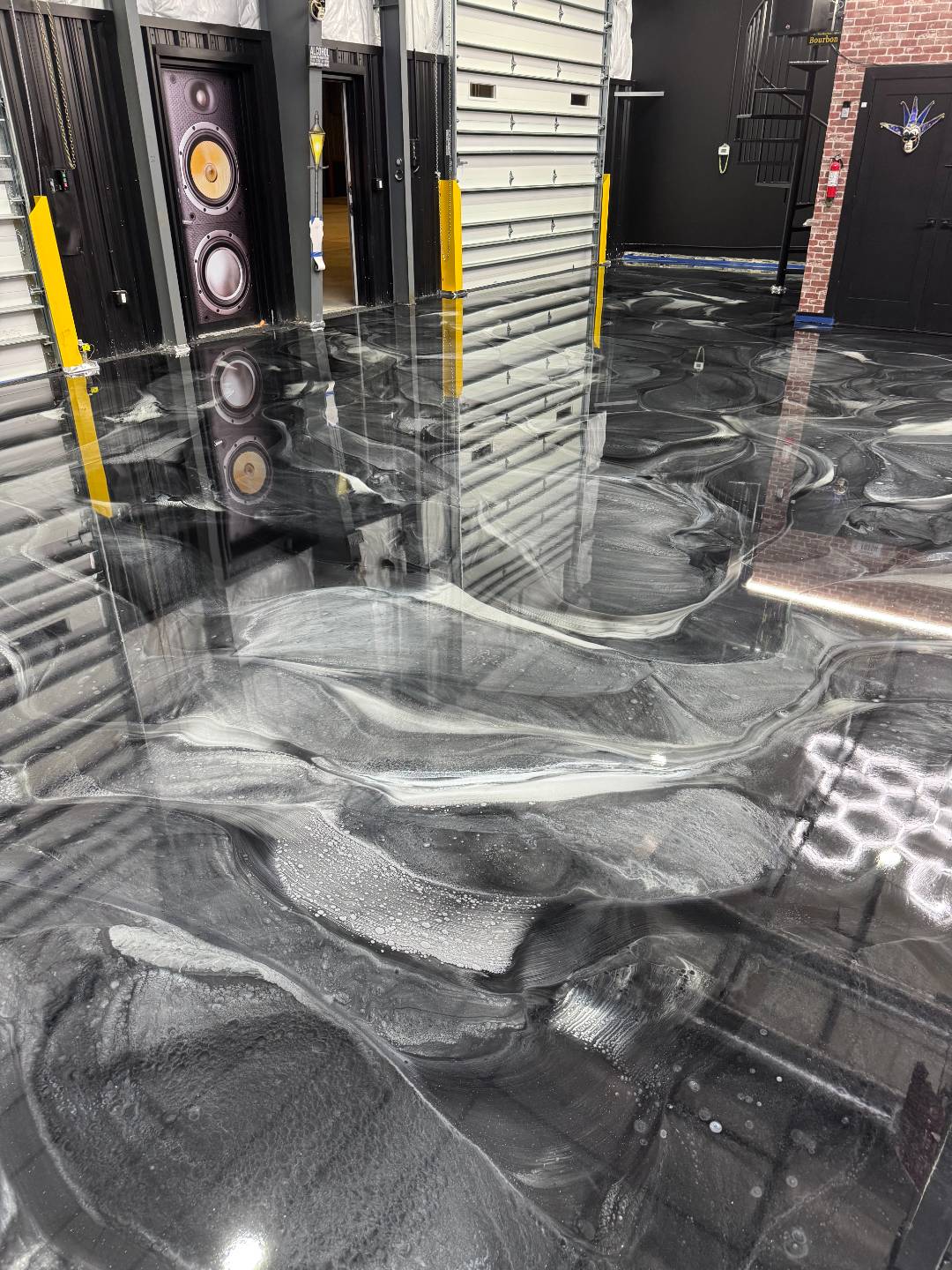
- Metallic. The space in the photo at the top of this page is a black and white metallic under a roll-up door, and it reflects everything in the room. It makes a statement, and it shows grit and scratches sooner than the others.
- Polished concrete. The slab itself becomes the floor: diamond-ground, densified and burnished, with no topcoat to peel. A good fit for light-industrial space where the concrete underneath is sound.
Plenty of businesses mix them, with flake in the bays and something dressier where customers stand. We price each area separately in the quote so you can see the choice clearly.
What business owners ask before we start
Can you install while part of the building stays open?
Often, yes. We split the floor into phases so one area cures while the other keeps working, and we set up dust control at the line between them. Whether that works for your space depends on layout and traffic, which is what the walkthrough is for.
Do you work nights and weekends?
Yes, on request. Night work also helps the cure in humid months, because the building’s air conditioning can pull moisture out of the air overnight. We put the work hours and the reopening time for each area in the written quote.
Which topcoat holds up to brake fluid and degreaser?
A chemical-resistant topcoat rated for the fluids you use. Tell us what spills and what goes in the mop bucket, and we will match the coating to it. A general-purpose epoxy topcoat can stain or soften under some shop chemicals, so we never guess.
Will a coated shop floor be slippery when it rains?
Not if the texture is planned. We broadcast a slip aggregate into the topcoat at doors, bay entries and wash areas, and keep the rest smoother so it sweeps clean. Bring your crew to feel the sample if footing is a concern for them.
Can you work with our general contractor?
Yes. We coordinate with the GC on timing so the floor goes down after paint and before fixtures, lifts or shelving. Getting that order right up front saves a second trip and keeps fresh coating clear of other trades while it cures.
Do commercial slabs near the bay need moisture mitigation?
Some do and some do not. Dickinson slabs sit on clay close to Galveston Bay, so we test every one before primer. If the reading is high, a mitigation layer goes in first and adds a day, which we build into the schedule from the start.
Can you recoat a service garage with a failing coating?
Yes, once the old coating is off. We grind it down to sound concrete, deal with any oil that soaked in underneath, and fill cracks before the new system goes down. Coating over a failing layer only buries the same problem under a newer floor.
Other Dickinson floors we install
The main commercial epoxy page covers our shop and warehouse systems in more depth. Look through the gallery for finished floors, head back to everything we do in Dickinson, or reach out about your space and we will set a time to walk it.
Where along I-45 we work
From the shop in Friendswood, central Dickinson is about 10 miles away. Shops and service garages off I-45 and its service road, and along FM 517, are a short drive for the crew.
Tell us how your space has to stay open.
Give us the rough square footage, what the floor sees day to day and the hours you run. We will call to set up a walkthrough.
- Night or weekend installs on request
- Topcoat matched to your chemicals
- Phases and reopening times in writing
Prefer to talk? Call (346) 624-0125